Quality Inspection
Part of Quality inspection before shipment
Comparing supplier self-checks with independent inspection
Compare supplier quality records with independent inspection by timing, evidence, impartiality and scope.
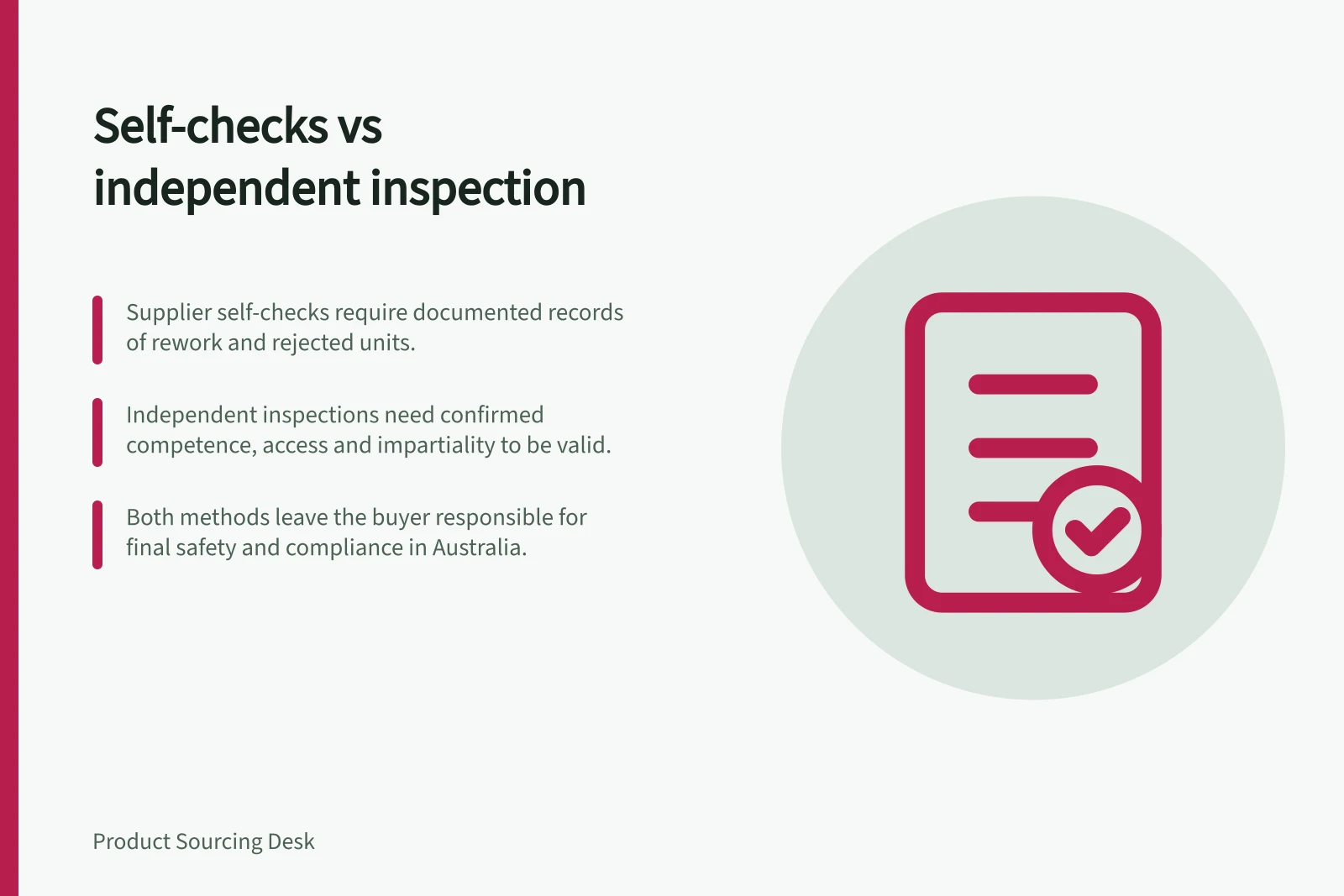
Supplier self-checks can find and correct problems during production. An independent inspection can give the buyer a separate assessment of an agreed lot or stage. Compare them by asking who selects the units, what is checked, how findings are recorded and who receives the report. Neither route establishes that every unit is sound.
What each route contributes
A supplier’s quality team can check goods as work proceeds and verify rework before packing. Request its procedure, dated records, results by variant, rejected-unit logs and corrective actions. A bare statement that “quality passed” says little without the lot, method and findings.
An outside inspector can report against the buyer’s brief. This may be valuable for a new supplier, changed product or earlier shipment problems. Confirm the inspector’s competence, access, equipment, reporting line and relationships that could affect impartiality. Who pays the invoice alone does not establish independence.
| Decision point | Supplier self-check | Independent inspection |
|---|---|---|
| Timing | Can run throughout production and rework | Covers the commissioned stage and accessible goods |
| Main use | Prompt feedback where goods are made | A separate assessment against the buyer’s brief |
| Evidence to request | Check records, rejected-unit logs and corrective actions | Scope, selection method, results, photographs and limits |
| Limit | The supplier has an interest in dispatching the order | The visit covers only its agreed scope and sample |
These are decision criteria, not performance ratings. The two records can answer different questions, so a buyer may use both.
Choose evidence for the order
Documented supplier checks may inform routine commercial decisions when the buyer can review their method and results. Add a separate finished-goods inspection when the buyer needs an independent account. Australian product-safety guidance advises checking factory controls and arranging qualified independent pre-shipment inspection for consumer products; it does not make any individual report a guarantee of safety.
Before booking, give the outside inspector the current specification, variants, known concerns, required methods and reporting format. Confirm whether the quoted service includes packing, measurements, functional checks or loading observation. These are separate scope choices, even if a provider offers them. If strength, composition or another property cannot be assessed with the booked methods, arrange suitable testing.
The buyer remains responsible for reviewing conflicting findings and recording the shipment decision. For consumer products supplied in Australia, neither route removes applicable product safety obligations.
Key facts on product safety in Australia
- Australian product safety guidanceAdvise checking factory controls and arranging qualified independent pre-shipment inspection for consumer products
- No guarantee of safetyNeither supplier self-check nor independent inspection removes applicable product safety obligations