Quality Inspection
Part of Quality inspection before shipment
Deciding how to handle a failed pre-shipment inspection
Confirm the failure, choose a remedy, verify corrected goods and record the shipment decision.
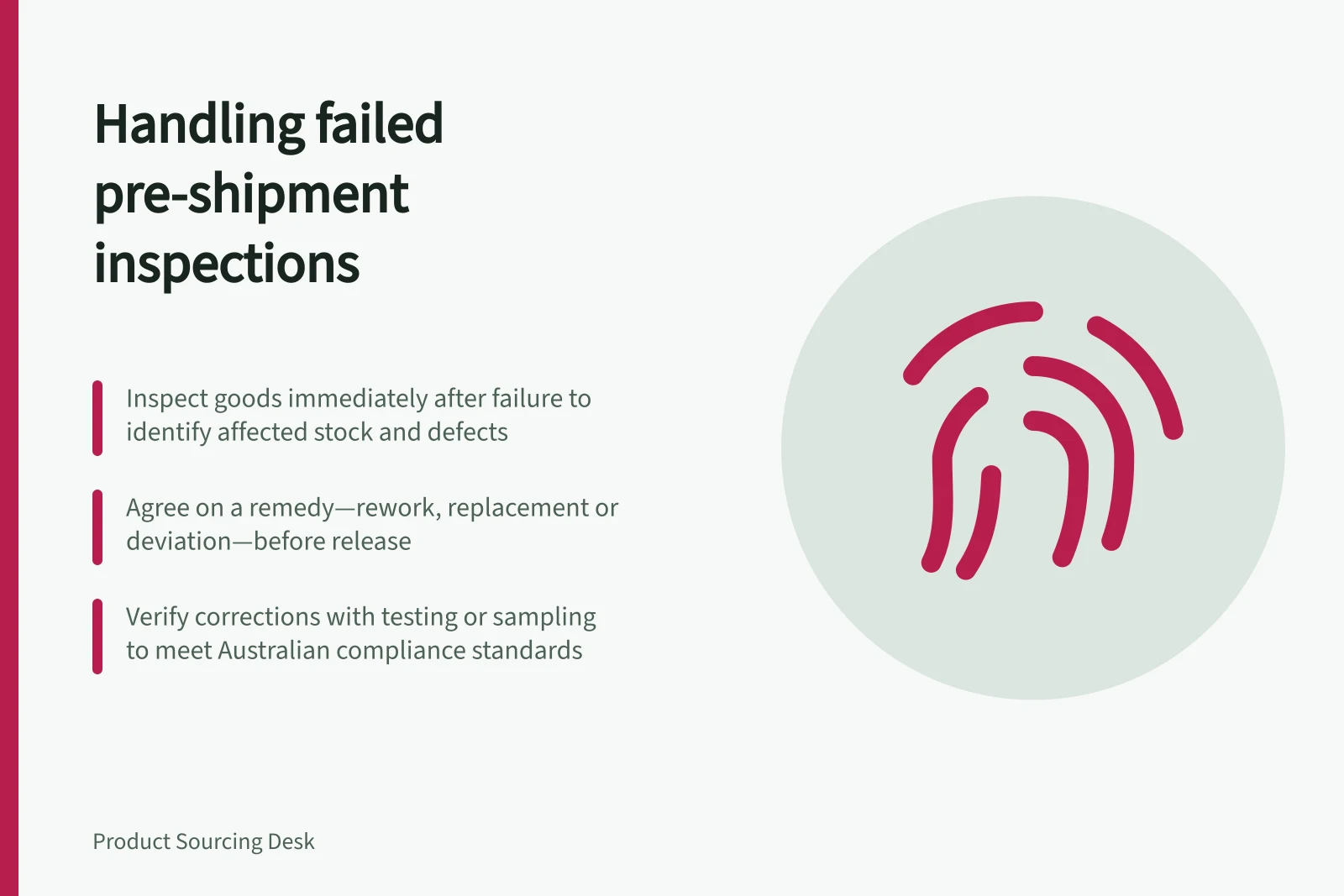
Hold affected goods after a failed pre-shipment inspection while you establish what failed, which stock may be affected and what the order requires. Agree the correction and how it will be verified before recording a release, rejection or negotiated exception. Available commercial options depend on the agreement and the defect.
Confirm the failure and its reach
Read the findings behind the pass or fail label. Match each defect to the approved specification, sample or purchase order and any authorised change. Check the lot and variants inspected, the selection method, defect counts and inaccessible goods. Ask for clearer measurements or photographs where the classification is uncertain.
Separate cosmetic and packing issues from suspected safety or performance failures. Sorting or rework may address a visible defect. A safety concern may need product-specific testing and specialist review. For consumer products supplied in Australia, a product subject to a mandatory standard must meet it before supply; a price concession cannot close a compliance gap.
Key facts about pre-shipment inspections in Australia
- Mandatory standards applyAll consumer products sold in Australia must meet relevant mandatory product safety standards.
- ACCC enforces complianceThe Australian Competition and Consumer Commission (ACCC) can take action against non-compliant products.
- Testing required for safety issuesDefects affecting safety require independent testing and specialist review before acceptance.
- ISO 2859-4 standard referencedUsed for sampling plans in quality control; applicable for inspection procedures.
Agree a remedy for the affected stock
Ask the supplier to identify the likely cause, affected quantity, proposed correction, owner and completion date. Segregate identifiable affected stock. If the cause may extend across the run, correcting only the photographed examples is insufficient.
Possible responses include rework, sorting, replacement production or acceptance of a clearly defined deviation where lawful and appropriate. Compare them with the customer promise, delivery needs and contract.
Do not change an acceptance rule after seeing a poor result simply to turn the report into a pass. If a deviation is accepted, identify the units involved and check that their description and customer-facing claims remain accurate.
Remedies for failed pre-shipment inspections – options and considerations
- ReworkCorrect defects at source. Suitable for non-safety issues. Must be verified before release.
- SortingRemove non-compliant units. Only valid if defect is isolated and does not affect safety or performance.
- Replacement productionNew batch produced to meet specs. Requires full re-inspection and may impact delivery timelines.
- Accepted deviationOnly legal if compliant with Australian standards and customer claims remain accurate. Not allowed for safety failures.
Accepting a deviation after a failed inspection – risks and benefits
- ProsCan save time and cost if defect is minor and non-safety-related. May maintain delivery schedule without new production.
- ConsRisk of non-compliance with mandatory standards. Cannot be used to bypass safety or performance requirements. May lead to recalls or enforcement action by the ACCC or Product Safety Australia.
Verify and record the decision
Agree the verification scope before correction starts. It may require examination of segregated units, a fresh sample from the corrected lot, a check of replacement production or suitable testing. Choose the method according to the defect and remedy. Keep reworked, rejected and replacement goods identified so they do not become mixed with accepted stock.
The new evidence should identify closed findings and open ones. A supplier sign-off or photograph of one repaired item may support the record, but it does not establish the condition of every affected unit. Where testing is needed, check that the report covers the relevant stock and Australian requirement.
Name the person authorised to release, reject or renegotiate the goods. Keep the original inspection, supplier response, verification evidence, accepted quantity and any agreed changes to dates or costs together. If the parties disagree, consult the contract’s dispute terms and preserve the correspondence.