Freight & Payments
Part of Negotiating with suppliers
Comparing price reductions with better payment terms
A price cut and a longer payment period have different effects.
A price reduction lowers the invoice; a longer payment period keeps cash in the business for longer. Compare both on the same order by weighing the discount against the cost of paying earlier.
Model the offer
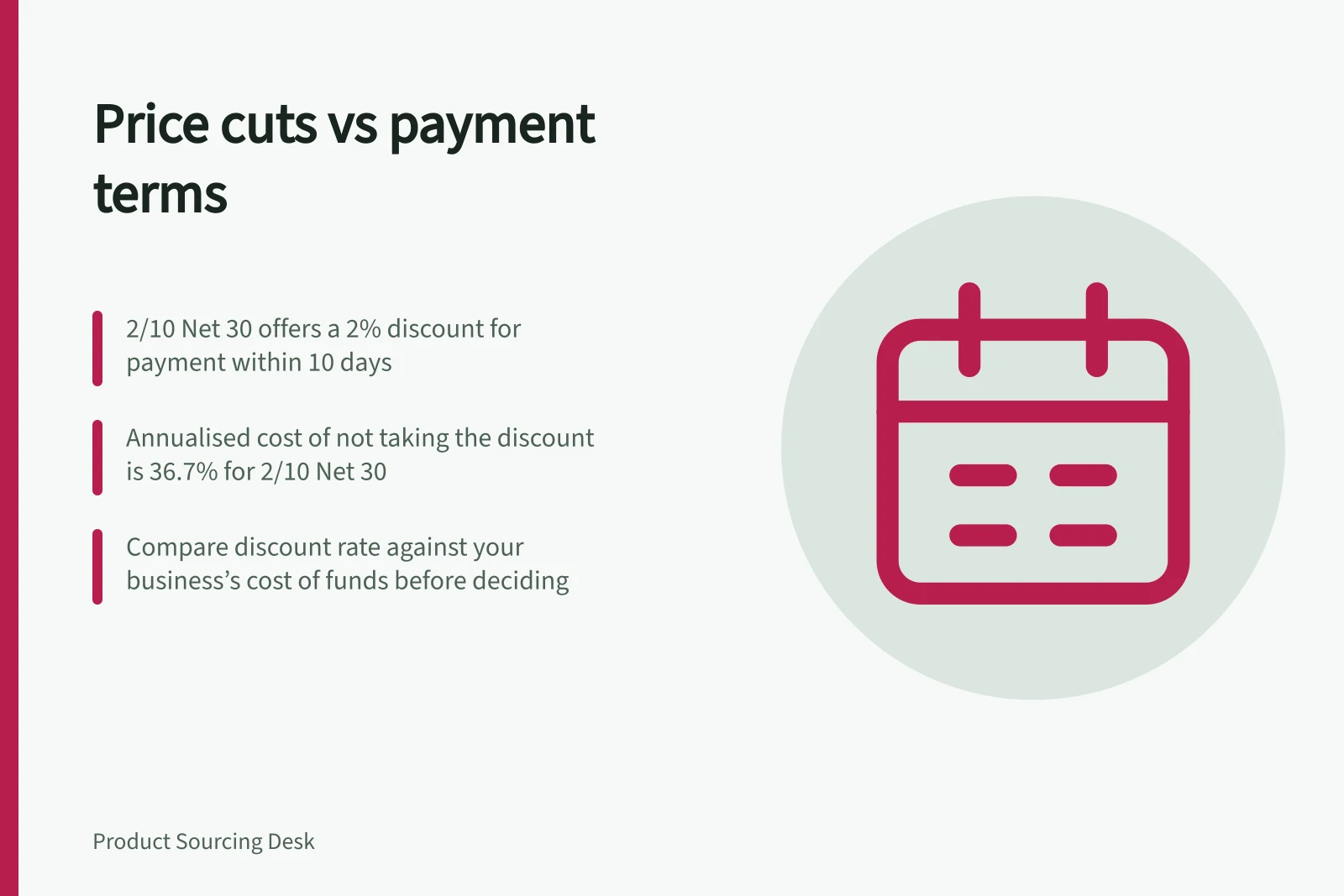
Hold the order and other terms constant. With 2/10 Net 30, paying by day 10 earns a 2% discount; paying on day 30 means paying the full price. The discount therefore buys 20 days of earlier payment.
Annualise the cost of declining the discount as (discount % ÷ (100 − discount %)) × (360 ÷ (net days − discount days)). For 2/10 Net 30, that is (2 ÷ 98) × (360 ÷ 20), or about 36.7% a year.
Compare that rate with your business’s cost of funds. If your rate is lower, paying on day 10 for the discount costs less; if it is higher, keeping the cash until day 30 costs less, assuming there is no other price or term difference.
Also record the invoice total, expected delivery date, due date, freight and likely stock sell-through. A later due date may ease a short cash-flow gap, while a price reduction lowers the cost of the order.
Check whether the discount is automatic or depends on meeting a strict deadline, and whether missing it changes the whole invoice. Confirm the currency and who carries exchange-rate or freight changes where relevant.
Choose on the full economics
Ask whether the longer term carries a price uplift, interest or a security requirement, and include any such condition in the comparison. Compare the offers on price as well as supplier reliability and trust: a low price alone does not establish value for money, and the supplier needs to deliver on time.
Put each option’s invoice total, payment deadline, due date, freight, currency and calculated annualised rate in a one-page decision record. Preserve the original quote and accepted terms, and ask the finance owner to check the cash-flow implications.
Choose the lower-cost offer only if its due date and conditions fit the business’s payment capacity.
How to Evaluate Supplier Payment Terms
- Lock order details (price, freight, delivery date)Ensure all variables except payment terms are fixed
- Compare against your cost of funds (e.g., bank loan, overdraft)If supplier’s implicit rate > your cost of funds, delay payment
- Confirm conditions (currency, exchange risk, security deposits)Check if price or term changes if deadline is missed
- Document decision with finance owner approvalPreserve original quote and accepted terms for ATO audit readiness