Supplier Shortlists
Part of Negotiating with suppliers
Negotiating order quantity without hiding the real demand
An attractive unit price at a higher minimum order quantity is not a saving if excess stock sits unsold.
An attractive unit price at a higher minimum order quantity is not a saving if excess stock sits unsold. Negotiate quantity using a demand range the business can explain, not a forecast presented as a promise.
Define three quantities
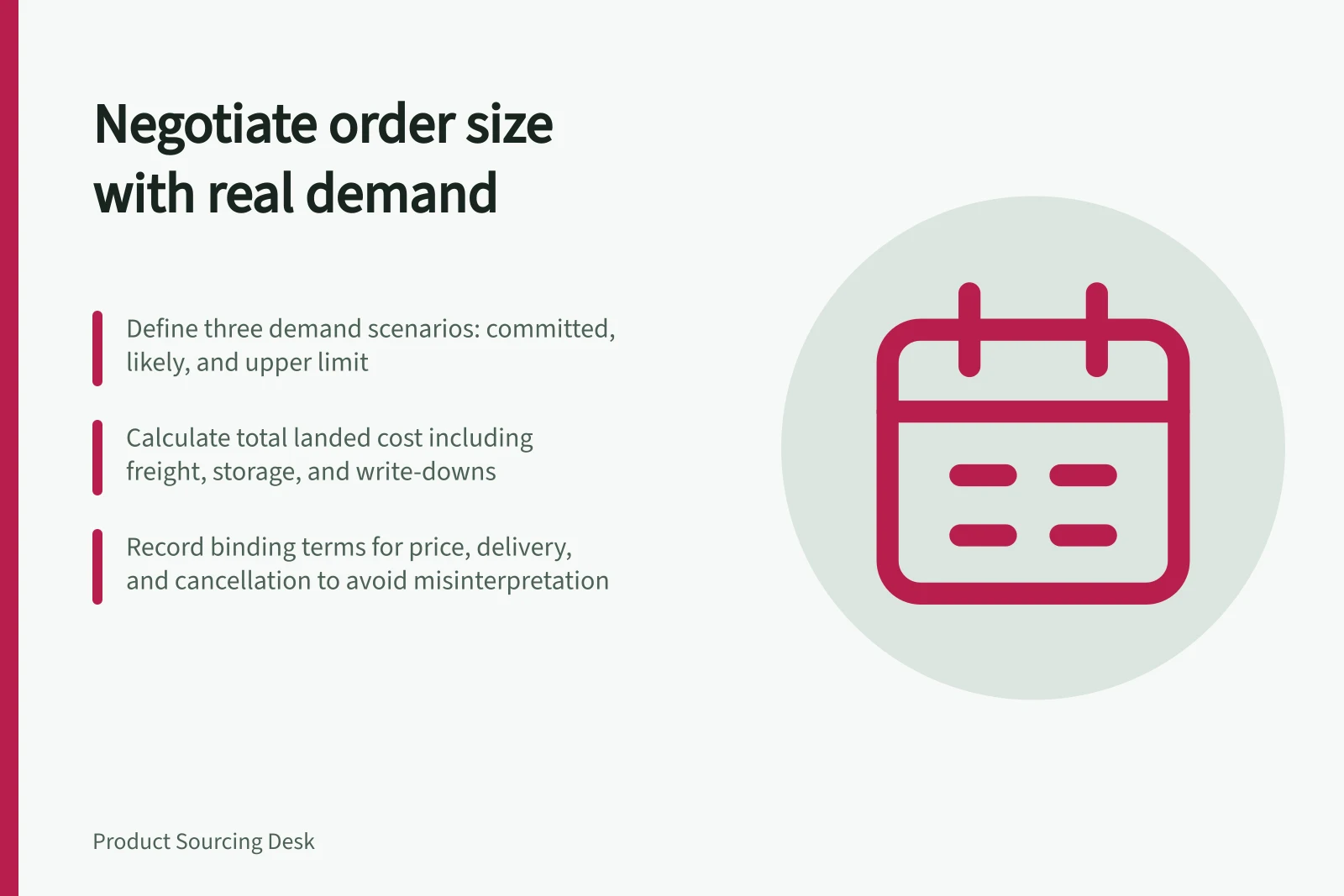
Write down the committed amount, the likely replenishment need and the upper scenario. Mark the assumptions behind each: sales rate, stock on hand, lead time, seasonal peak, and expiry or style risk. Ask the supplier for price and lead-time options at those levels.
A staged release against an agreed framework may be useful, but check when each release becomes a binding purchase.
Calculate total landed cost and cash tied up, not just unit price. Include freight, storage, quality inspection and likely write-downs.
If the supplier needs volume certainty, explore a narrower SKU range or longer planning notice before offering a quantity the business cannot take.
Total Landed Cost vs Unit Price: Why It Matters
- Metric
- Unit Price (A$)
- Cash tied up
- High for large MOQs; impacts working capital and GST liabilities
Record the commitment
Distinguish a forecast shared for planning from a purchase order. Confirm the minimum, permitted split deliveries, cancellation rules and what happens if demand changes.
Record the agreed terms for goods, price, payment, timeframes, delivery and quality. Use that record to prevent the sales team and supplier from interpreting the same forecast differently.