Supplier Shortlists
Negotiating with suppliers
A useful supplier negotiation produces an order the buyer can afford and the supplier can deliver.
A good supplier negotiation yields an order you can afford and the supplier can deliver. A low quoted unit price can be poor value if it depends on unwanted volume, vague quality or payment terms that strain cash flow. Prepare your trade-offs before requesting a concession.
Bring a realistic demand picture
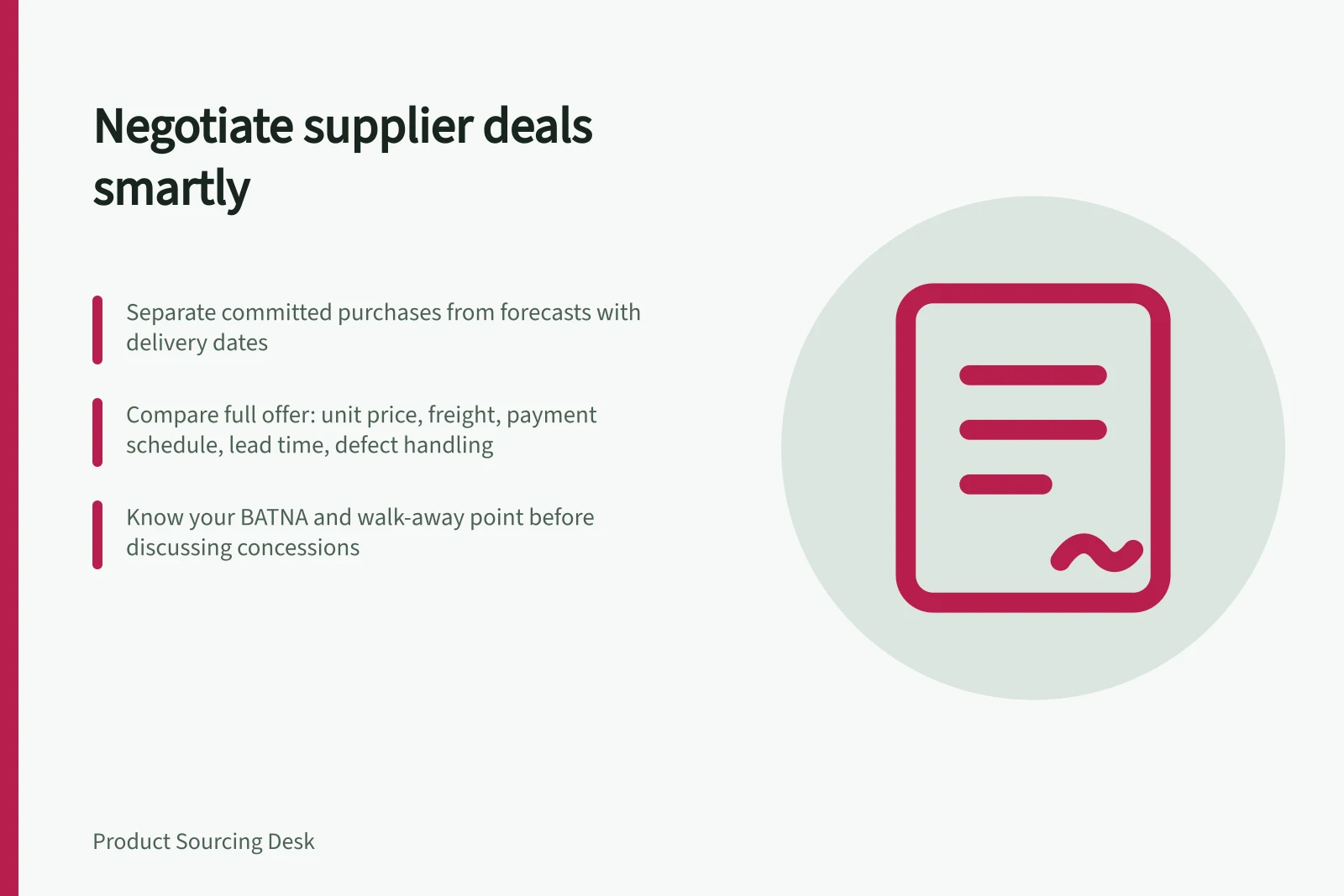
Separate committed purchases from forecasts, and show the quantities and delivery dates the business can support. Ask which price breaks or lead times follow from each option.
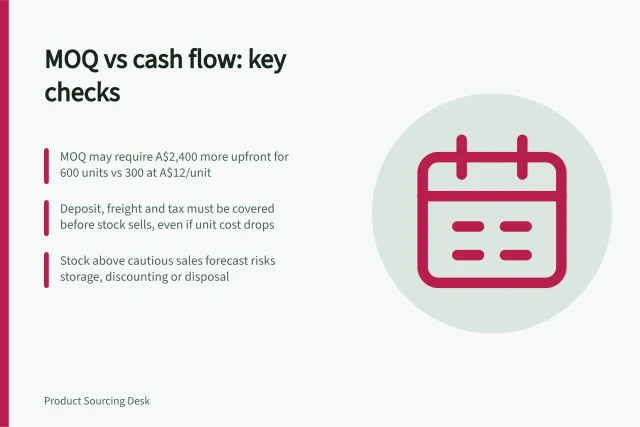
Do not call a hoped-for sales forecast a firm order. If the supplier proposes a higher minimum, calculate the carrying cost, expiry or obsolescence risk, and storage needs before accepting.
Compare the full offer: unit price, freight, payment schedule, lead time, defect handling, packaging, testing and minimum order quantity. Australian business.gov.au guidance includes price, reliability, delivery and quality among the factors to consider when choosing suppliers. A lower price with weaker specifications may simply move cost to returns and customer service.
Key Factors in Supplier Negotiation
- Unit PriceLower price may not equate to better value if quality or delivery terms are compromised.
- Lead TimeLonger lead times may allow lower prices but affect inventory planning and cash flow.
- Payment TermsFavourable payment schedules reduce cash flow strain; avoid terms that delay payments excessively.
- Minimum Order Quantity (MOQ)High MOQs increase carrying costs and risk of obsolescence; assess storage and expiry risks.
- Quality & Defect HandlingVague quality standards can shift cost to returns, rework and customer service.
Make concessions conditional and visible
Ask for a specific exchange: a longer lead time for a smaller order, a volume commitment for a clear price schedule, or a staged delivery for earlier payment. Record what each side gives and when it takes effect.
Confirm whether the concession applies to one purchase order or future orders. Avoid verbal assumptions that a new price includes the same material, finish and inspection standard.
Prepare your negotiating position
Decide what matters most before the discussion and identify which outcomes you can accept. Where possible, research objective benchmarks. Guidance on distributive negotiation recommends defensible numbers, such as market prices or third-party valuations, rather than an opening demand alone.
Know your Best Alternative to a Negotiated Agreement (BATNA) and your walk-away point. Research from the Program on Negotiation at Harvard Law School highlights preparing a BATNA to improve negotiation outcomes. An alternative lets you assess a supplier’s proposal against what you could do instead.
For a longer-term supplier agreement, explore interests as well as stated positions. Ask why a term matters, brainstorm options, and test small packages against both parties’ priorities.
Check the supplier before you negotiate
Build a shortlist through several channels: search online, attend an industry event or exhibition, ask other businesses for recommendations, or use an industry group, professional network, database or association website. Research can help assess risks such as reliability, compliance and foreign interference.
Before signing a contract or placing an order, read customer reviews and ask the supplier for references. Contact other businesses they work with, and search the Australian Business Register to confirm the business is legitimately registered. The Personal Property Securities Register can show whether supplied goods are being used as security for a debt.
Consider how the supplier’s circumstances affect the offer. A larger supplier may have resources and systems to keep delivering when something goes wrong; a smaller supplier may offer a closer relationship.
An experienced supplier may suit a long-term contract; a newer supplier may provide more personal service as your business grows. Distance can also mean longer delivery times and higher freight costs.
Choose an approach that fits the relationship
For a one-off purchase with clear, limited resources to divide, positional bargaining may fit: prepare a defensible opening figure and know your walk-away point.
For a strategic or ongoing relationship, an integrative approach may be more useful. Explore both sides’ interests, brainstorm options together, and test small packages before settling on an arrangement.
A cooperative approach can preserve goodwill in an ongoing supplier relationship. Set expectations of fairness and reciprocity, focus on shared long-term measures, and invest in relationship-management behaviours.
Negotiation Approaches by Relationship Type
- Positional BargainingBest for one-off purchases with clear limits. Pros: simple, quick. Cons: may damage long-term relationships.
- Integrative ApproachIdeal for ongoing partnerships. Pros: builds trust, finds win-win solutions. Cons: requires more time and collaboration.
- Cooperative ApproachSupports long-term goodwill. Pros: encourages fairness and reciprocity. Cons: less effective for urgent or high-stakes deals.
Keep communication constructive
Negotiation does not end at the initial agreement. Business.gov.au recommends maintaining supplier relationships and reviewing suppliers. Regular, open discussions help both sides address expectations and working issues as the relationship continues.
A reliable supplier helps a business provide quality products and services at the right price and keep enough stock and materials to meet customer demand.
Put changes into the operating record
For agreed changes, use a written change process; see the dedicated guide for details.
After delivery, review supplier performance using measures such as on-time quantity, dispute time and actual landed cost. Begin the next negotiation with those facts, not the headline discount alone.
Supplier Performance Metrics to Track
- On-time Delivery Rate
- Measure percentage of orders delivered by agreed date.
- Dispute Resolution Time
- Average days to resolve quality or delivery issues.
- Actual Landed Cost
- Total cost including freight, customs, and handling—used for benchmarking.
In this guide
- Negotiating order quantity without hiding the real demandAn attractive unit price at a higher minimum order quantity is not a saving if excess stock sits unsold.
- Comparing price reductions with better payment termsA price cut and a longer payment period have different effects.
- Agreeing on a written change processSupplier relationships change after the first order.
- Recording concessions that affect product qualityA supplier may offer a lower price in exchange for a different material, finish, tolerance or inspection level.