Quality Inspection
Part of Negotiating with suppliers
Recording concessions that affect product quality
A supplier may offer a lower price in exchange for a different material, finish, tolerance or inspection level.
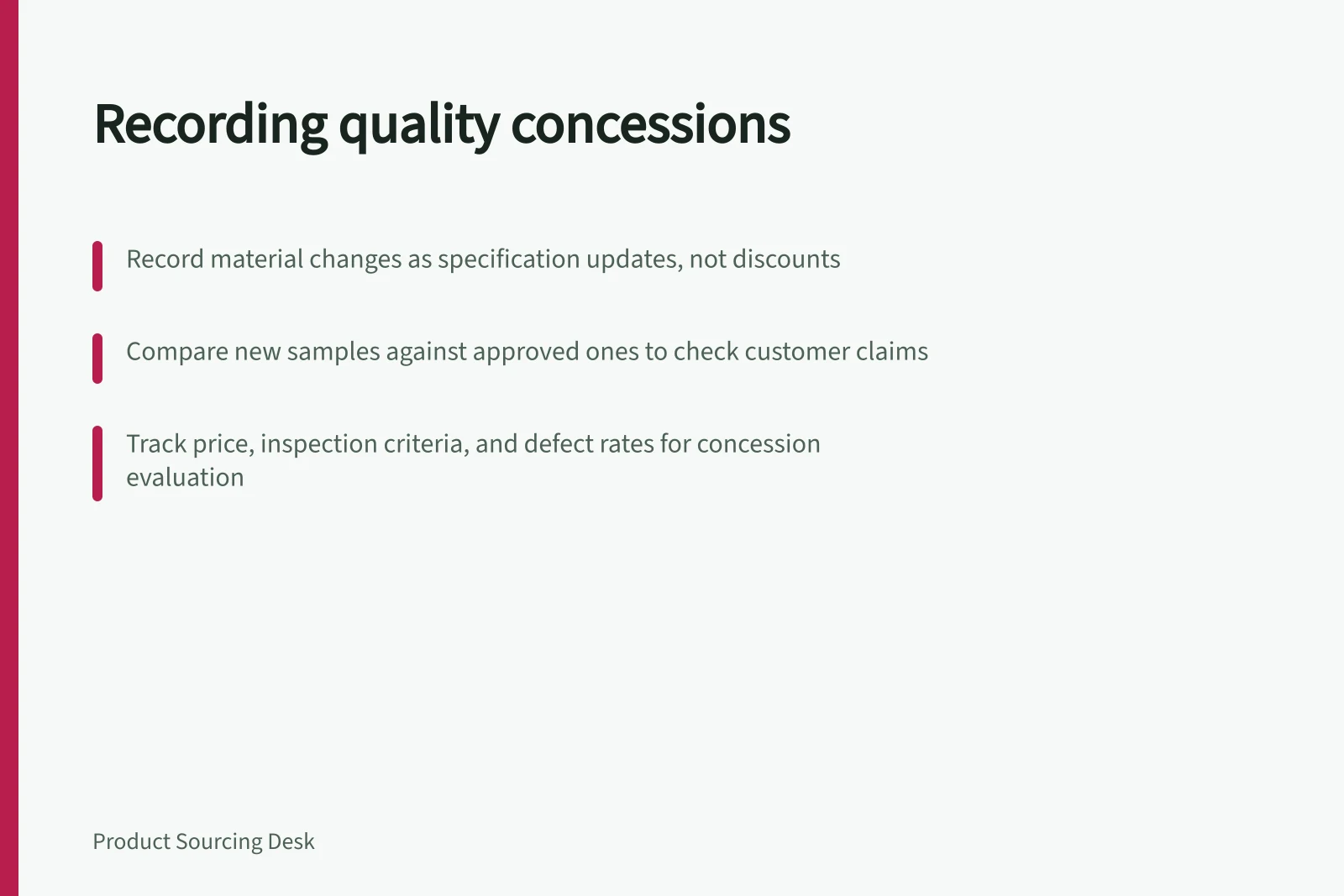
A supplier may offer a lower price in exchange for a different material, finish, tolerance or inspection level. Treat that as a specification change, not a simple discount. Record the quality effect before accepting the purchase order.
Compare against the approved sample
State exactly what changes: fabric weight, component grade, coating, packaging or test method, for example. Request an updated sample or specification, then decide which customer-facing claims need rechecking. A cheaper product that no longer matches its description can create returns and trust costs larger than the discount.
Australian business.gov.au advises comparing suppliers on factors including price, reliability, size, time in business and location. It warns that cheap does not always mean value for money.
Original vs. Concessioned Product Specifications
- Material Grade
- Original: High-grade cotton; Concessioned: Standard-grade cotton
- Coating Type
- Original: Water-resistant PU; Concessioned: Basic polyurethane
- Packaging
- Original: Recyclable cardboard; Concessioned: Non-recyclable plastic wrap
Put the concession in one record
Keep the original specification, proposed alternative, approval owner, effective orders, revised price, inspection criteria and disposition of old stock. If the change affects safety, compliance or a regulated claim, seek the appropriate specialist review before ordering. Never let a purchasing note become an unapproved product substitution.
After delivery, inspect against the agreed new standard and compare defects and complaints with the previous version. Keep the results separate so the team can decide whether the price concession was worthwhile. If the supplier reverts to the original specification later, record that change too; quality cannot be inferred from price alone.